
Jesmonite kit AC100
Jesmonite AC100 is the ideal resin to bring your creativity to life. It is an alternative to polyester or polyurethane for all types of decorative pieces. Ideal for use with silicone moulds.
Jesmonite
The most popular Jesmonite products among our customers.
Jesmonite AC100 is the ideal resin to bring your creativity to life. It is an alternative to polyester or polyurethane for all types of decorative pieces. Ideal for use with silicone moulds.
Acrylic pigment for Jesmonite resin. Apply a maximum of 2% by weight. AC100 resin produces the most vivid colours as it has a higher acrylic resin content.
Pigments are sold by weight and each colour has a different density, so it may appear that some colours are only half full. This is particularly true of white, oxides and terracotta.
Jesmonite AC84 is a two-component water-based acrylic resin, ideal for creating stone-finished pieces from moulds. Its high resistance and detail fidelity allow for durable and realistic results, with a texture that simulates natural stone, but without the actual weight. It is easy to use, customisable with pigments and safe as it does not emit toxic vapours. Perfect for sculptors, designers and creators of artistic and decorative pieces.
Case containing all official pigments Jesmonite in 10 g presentations, for AC100, AC300 and AC84
Includes:
Reslin
Reslin® is a 100% biodegradable material consisting of two parts, the oil and the activator.
The first 100% biodegradable resin of plant origin! Resin based on linseed oil and a natural activator based on sugar beet molasses: an innovative, safe and sustainable way to create your own decorative, utilitarian and artistic objects. Reslin® is easy and creative to use, with no harmful substances! Your pieces will be ready in 60 minutes at a low temperature in a convection oven. These Reslin® sets contain enough material to create multiple Reslin® objects. They are ideal for both small and large projects. Create endless possibilities with Reslin®!
Neon-based mineral pigments. Perfect for use with Jesmonite AC100/AC200/AC300. You can unleash your creativity with truly striking colours (neon effect).
Please note: does not glow in the dark! No fluorescent pigments.
Very fine mineral powder in beautiful, bright pearlescent colours. Mix the mica powder with Reslin® to give your objects a shiny pearlescent effect.
Format: 9 g
Mix this glow-in-the-dark pigment with Reslin® and create your own glow-in-the-dark artwork. It provides a glow-in-the-dark effect when properly charged and used in a dark room.
Format: 10 g
Natural glitter made from mica slate grain, which does not contain plastic. You can sprinkle it into your mould or mix it with your Reslin® to add a beautiful shine to your creation.
15 g format
Reslin® Tint, highly pigmented, solvent-based and with excellent coverage. Add a few drops of Reslin® Ink to the Reslin® mixture to colour it. You will obtain very vivid colours with excellent coverage. Size: 20 ml.
Optimize your laminates with the INFUVAC range by Resineco. Below, you will find our selection of consumables for vacuum and infusion techniques, ideal for creating or repairing resin parts reinforced with fiberglass, carbon fiber, or kevlar.
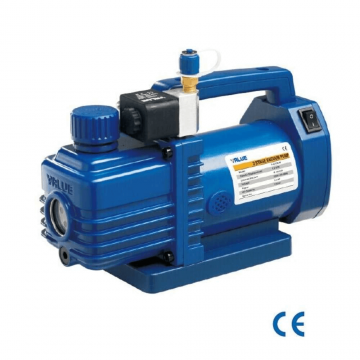
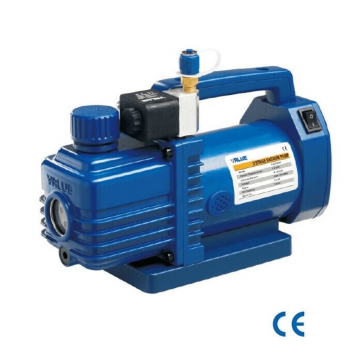
Discover our selection of vacuum equipment and pumps specifically designed for small workshops, entrepreneurs, and hobbyists. We offer tools with the perfect balance between performance and price, ideal for those seeking professional results on small to medium-sized parts without a disproportionate investment.
The infusion process allows for the fabrication of large-scale structures with an optimized resin-to-fiber ratio and total absence of trapped air. Unlike hand lay-up, in infusion, the resin is drawn in by the vacuum itself, impregnating the fabrics (carbon, glass, or kevlar) in a uniform and controlled manner.
Key elements for successful infusion:
The vacuum bag is the essential component for generating the necessary pressure on the laminate. Our selection of high-resistance films guarantees perfect compaction and excellent interlaminar adhesion, removing trapped air and ensuring the resin covers every part of your carbon fiber, fiberglass, or kevlar project.
Complete vacuum pump kit for composites with all accessories needed for resin infusion and vacuum compaction of fiberglass and carbon fiber using polyester and epoxy resins.
Composite adhesive/fixative spray – TensorGrip TC42 500 ml, high‑performance adhesive for infusion and RTM holding reinforcement fibres without impacting surface finish or integrity.
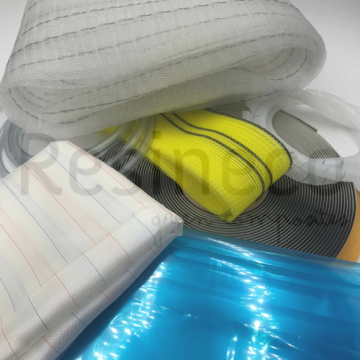
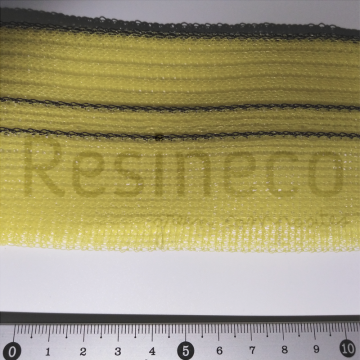
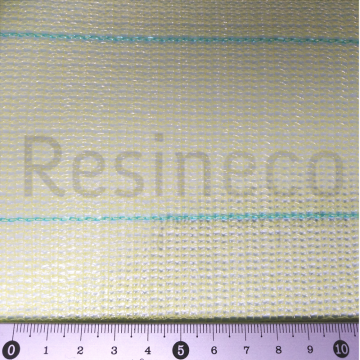
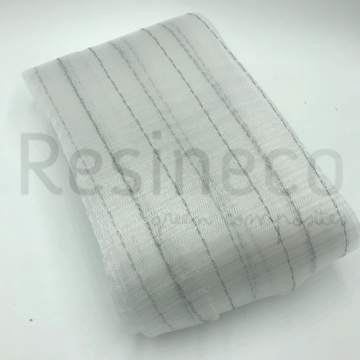
Peel Ply 84 g/m² – 120 cm wide (linear meter) for easy separation of fiberglass or carbon fiber from other consumables, leaving a rough surface ideal for bonding.
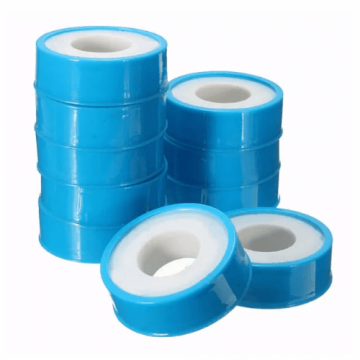
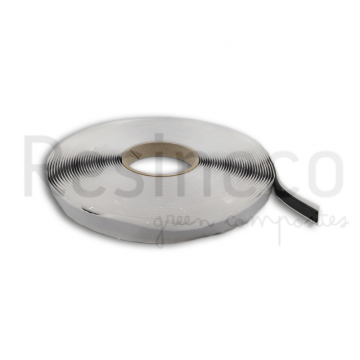
Tacky Tape 140 ºC grey 15 ml sealing tape for vacuum and resin infusion processes, providing reliable airtight sealing of bagging systems.
Vacuum and infusion techniques mark the difference between a handcrafted finish and a high-performance part. At Resineco, under our own brand INFUVAC, we provide the critical materials needed to manufacture or repair parts with full technical guarantee, using fiberglass, carbon fiber, or kevlar reinforcements.
Implementing these processes not only improves aesthetics but also transforms the structural integrity of your projects thanks to the following advantages:
The INFUVAC range covers every stage of the lamination process and is compatible with the most demanding materials on the market. Whether for marine applications with glass fiber, high-end automotive with carbon, or structural reinforcements with kevlar, our products ensure homogeneous impregnation and exceptional structural strength.
In this section you will find answers to the most frequently asked questions about vacuum systems, resin infusion, consumables and Infuvac equipment. Our goal is to help you optimize processes, avoid common mistakes and select the right materials for each application.
Although they are often confused, vacuum bagging and resin infusion are two different composite manufacturing processes used with fiberglass, carbon fiber or kevlar.
Vacuum bagging consists of applying vacuum pressure over a laminate that has already been manually impregnated with resin. The vacuum helps compact the layers, remove trapped air and reduce excess resin, improving the final quality of the part.
In resin infusion, however, the fibers are placed dry inside the vacuum bag and the resin is later drawn through the laminate using the vacuum generated by the pump. This allows for a much more uniform, lightweight and controlled impregnation.
Resin infusion generally provides:
Vacuum bagging, on the other hand, is a simpler and more accessible process, ideal for repairs, small parts or users getting started with composite manufacturing.
To achieve a clean, homogeneous and reliable resin infusion process, it is important to use the correct consumables. Each material has a specific role within the vacuum system and directly affects the final quality of the laminate.
The most common consumables used in resin infusion are:
It is also important to use a suitable vacuum pump according to the size of the part and the type of resin being used.
Using consumables specifically designed for composites helps reduce errors, prevent leaks, improve surface finish and achieve a much more uniform impregnation.
Choosing the right vacuum pump mainly depends on the type of process you want to perform, the size of the part and the amount of resin flowing through the laminate during production.
For small projects or beginner applications, such as repairs, simple vacuum bagging or small resin infusions, a compact vacuum pump with moderate airflow is usually sufficient.
However, for larger parts, long infusion processes or carbon fiber applications, it is recommended to use a pump with:
In composite manufacturing, it is common to use pumps capable of achieving high vacuum levels in order to reduce air bubbles, compact fibers correctly and improve the fiber-to-resin ratio.
It is also highly recommended to use a resin trap between the part and the pump to protect the system from accidental resin intake.
Using the correct vacuum pump helps achieve lighter, stronger and more professional laminates, especially in resin infusion and vacuum bagging processes.
The recommended vacuum level depends on the type of process, the materials being used and the quality level required for the laminate.
When working with carbon fiber, a high vacuum level is usually preferred in order to achieve better fiber compaction, minimize air bubbles and improve the fiber-to-resin ratio.
For fiberglass applications, the requirements are generally more flexible, especially for less structural parts or simpler manufacturing processes.
In most cases, having a stable and leak-free vacuum system is far more important than trying to achieve extremely high vacuum values.
A proper vacuum level helps:
For reliable composite manufacturing, it is recommended to use vacuum pumps specifically designed for resin infusion or vacuum bagging and always check the system for leaks before starting the process.
Peel ply, flow media and perforated film are different consumables used in vacuum bagging and resin infusion processes. Although they are often used together within the laminate stack, each one has a specific purpose.
Peel ply is a release fabric placed directly on top of the laminate. Its main function is to leave a clean and textured surface ready for secondary bonding, additional laminating or finishing operations without sanding.
Flow media is mainly used in resin infusion and helps distribute resin quickly and evenly across the entire part. Without it, resin flow would be much slower and dry spots could appear.
Perforated film acts as an intermediate layer that controls resin flow and prevents certain consumables from sticking to the laminate. The type and number of perforations can influence how much resin passes through the system.
Using these materials correctly helps:
Choosing the right vacuum bag mainly depends on the type of process, working temperature, part geometry and required vacuum level.
For simple vacuum bagging processes or small resin infusions, standard flexible vacuum bags with good elasticity and easy handling are usually sufficient.
However, for more demanding applications such as:
it is recommended to use vacuum bags with:
It is also important to choose the correct bag format according to the manufacturing process:
An unsuitable vacuum bag may cause leaks, wrinkles, tearing or vacuum loss during the process, directly affecting laminate quality.
For this reason, it is important to select materials compatible with the resin type, working time and overall process conditions.
Air leaks are one of the most common problems in vacuum bagging and resin infusion processes. Even a small air leak can affect laminate quality and significantly reduce the efficiency of the vacuum system.
One of the first signs of a possible leak is that the system cannot maintain a stable vacuum level or that the pump runs continuously without reaching the expected vacuum.
To locate a leak, it is recommended to carefully inspect:
In many cases, leaks can be detected by listening for small hissing sounds or by applying light hand pressure to suspicious areas.
It is also common practice to perform a vacuum test before starting the infusion process to ensure the system can maintain vacuum for several minutes without significant pressure loss.
Detecting and fixing leaks before starting the process helps:
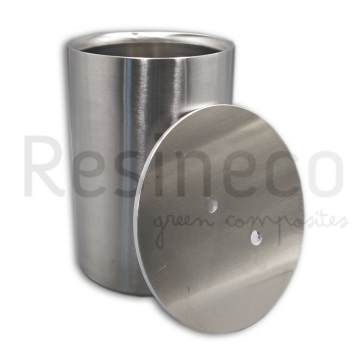
A resin trap is an essential safety component in any vacuum bagging or resin infusion system. Its main purpose is to protect the vacuum pump by preventing resin from being accidentally sucked into the system.
During a resin infusion process, especially with large parts or long infusions, excess resin may travel through the hoses or unexpectedly enter the vacuum line. Without a resin trap, this resin could reach the vacuum pump and cause:
The resin trap acts as an intermediate container between the part and the pump, collecting resin before it can continue through the vacuum circuit.
Besides protecting the pump, a resin trap also helps to:
When working with composites, it is highly recommended to always use a resin trap, especially for carbon fiber infusion processes or large composite parts.
When starting with resin infusion, it is common to make mistakes that can affect laminate quality or complicate the manufacturing process.
One of the most common issues is failing to ensure proper vacuum sealing. Even a small air leak can lead to vacuum loss, dry spots or poor fiber impregnation.
Other common mistakes include:
In many cases, problems are caused by insufficient preparation before starting the infusion. For this reason, it is highly recommended to perform small test laminates before attempting large or complex parts.
Another frequent mistake is not using a resin trap, which may result in resin entering and damaging the vacuum pump.
Using suitable consumables, checking all connections and preparing the setup carefully helps avoid most common problems in composite resin infusion.
Yes, it is possible to start with resin infusion without previous experience, especially when beginning with simple projects and beginner-friendly materials.
Although resin infusion is a more advanced technique than traditional hand lay-up, there are now starter kits, consumables and equipment that make the learning process much easier, even for beginners.
For a safer and more successful start, it is recommended to:
The key is understanding how resin flows through the vacuum system and preparing all consumables correctly before starting the process.
With good preparation, it is possible to achieve highly professional results from the very first infusion projects, even without advanced composite manufacturing experience.
Vacuum bagging and resin infusion processes can use different types of resin, provided they have suitable viscosity and working time characteristics to ensure proper fiber impregnation.
The most common resins used in composite manufacturing are:
For resin infusion, it is especially important to use low-viscosity formulations, as they allow the resin to flow properly through fibers and consumables.
It is also important to consider:
A resin that is too thick or cures too quickly may complicate the infusion process and cause dry spots or uneven impregnation.
Choosing the right resin helps achieve stronger, lighter and more professional composite laminates.
check_circle
check_circle